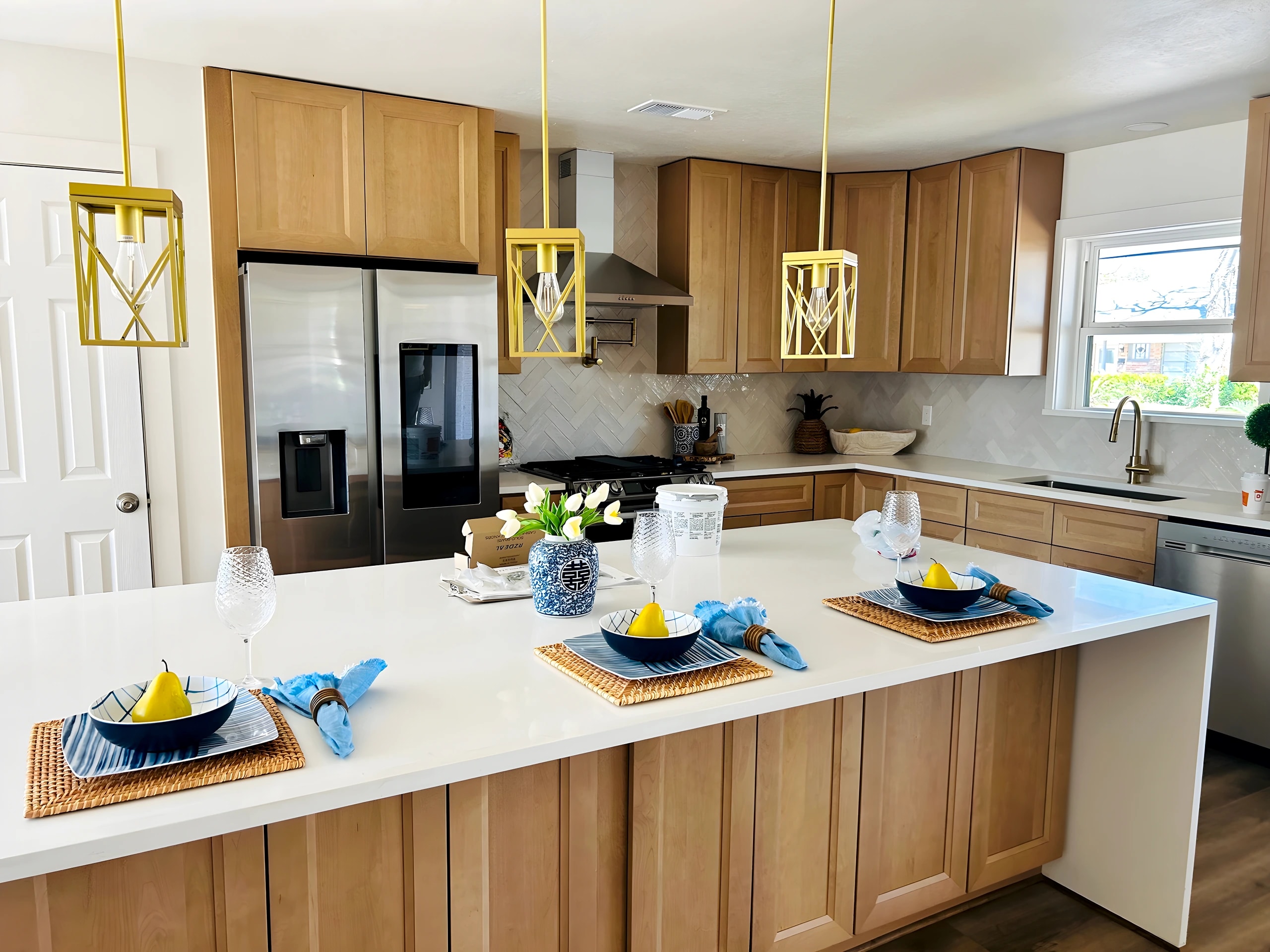
Kitchen Remodel Checklist.
Everything to lock in before you sign a contract — and the questions that separate a good contractor from a bad one. The checklist we wish every homeowner had.
30+ days out: planning
Inventory your selections
Cabinet style, color, door profile. Counter material and edge profile. Backsplash tile pattern. Hardware (knobs, pulls). Faucet, sink, fixtures. The more you've decided before signing, the less mid-project drift.
Realistic contingency budget
Reserve 10-15% beyond the contract price. On any home older than 25 years, anything from cast-iron drains to outdated wiring can show up when walls open. A contingency means a surprise doesn't kill the project.
HOA architectural review (if applicable)
Most Woodlands villages, Sugar Land master-planned communities, and newer Cypress developments require HOA pre-approval for permitted work. Review takes 2-4 weeks. Submit early.
Swing-room logistics
Where are you going to cook for 6-8 weeks? Set up a garage, utility room, or spare bathroom kitchenette with the microwave, fridge, and a small prep counter. Plan for take-out and grilling weather.
Choosing a contractor
Get references — and call them
Not just the name and number. Call. Ask: 'How was the on-site experience? Did they finish on time? Were there surprises? Would you hire them again?'
Verify written quality standards
Ask: 'What's your tile lippage tolerance? What waterproofing membrane do you use? Do you flood-test shower pans?' If the answer is vague or 'we have great installers' — that's not a standard.
Check insurance + workers' comp
Both general liability and workers' comp. If a sub gets injured on your property without coverage, the homeowner can be liable. Ask for certificates.
Ask to see a completed project
Not just photos — an actual recent project, ideally one in your area. The two-year-old kitchen tells you more about quality than the day-one walk-through.
Read the contract carefully
Look for: clear scope, timeline, payment schedule, change-order process, lien waivers, completion criteria. Vague contracts are where disputes live.
Before demo day
Photograph every surface
Before-and-after photos are useful for memories. They're more useful as documentation if anything in adjacent areas (floors, walls, fixtures) gets damaged during demo.
Empty the kitchen completely
Every cabinet, every drawer, every shelf. Clear the counters. Move the contents to your swing-room kitchenette and labeled boxes.
Designate a 'do not touch' zone
If there are areas the contractor shouldn't enter (your home office, kids' rooms), tell them and put up a sign. Most pros respect this — but they need to know.
Pet plan
Dust, noise, and open doors are bad for pets. Plan for boarding, family stay, or a sealed-off room with someone checking on them. The crew can't be responsible for the cat that bolts when a saw fires up.
HVAC plan
Demo creates dust. Many crews seal off the kitchen HVAC vents and run a portable filtration unit. Confirm this is in scope.
During the project
Daily walk-through
End of each day, walk the project with the lead. 5 minutes. Catches small things before they become big things. Take photos.
Use the change-order process
If you want to change something — color, material, scope — request a written change order with cost and timeline impact. Verbal changes are where disputes live.
Don't add to the scope mid-project unless necessary
'While you're here, can you also...' is the #1 way kitchen remodels go over budget and over time. If it's truly urgent, formal change order. Otherwise, add it to the next project.
Watch for the inspections you can verify
Plumbing rough-in, electrical rough-in, framing if applicable, final. Each one should have a sign-off. Ask to see them.
Trust but verify on the waterproofing
If your project includes any tile work in a wet area (sink wall backsplash, etc.), you can ask: 'Is the substrate cement board? Is the membrane two-coat?' A contractor with documented standards will answer in detail.
Walk-through and sign-off
Bring a flashlight and a level
Look at every joint, every transition. Check inside cabinets — drawer alignment, shelf level, hardware tightness.
Test everything
Open every door, pull every drawer, run every faucet, check every outlet, turn on every light. Run the dishwasher cycle.
Punch list, not 'small stuff to fix later'
Anything you want adjusted goes on a punch list with the contractor present. Get a date for completion. Don't sign final until punch list is closed.
Get the manuals + warranties
Every appliance and fixture should have a manual and warranty info collected and handed to you. Document who supplied what.
Get the completion video (if your contractor does them)
We do a completion video on every cabinet job — close-ups of joints, narration of materials and upgrades. It's useful for future reference and for any future warranty conversations.
Where to go from here
If you’re early in planning, our kitchen remodel cost guide is a useful next read for budgeting realistically.
If you’re still deciding between refinishing the cabinets you have and replacing them entirely, the refinish vs replace decision guide walks through the structural test you can run yourself.
When you’re ready to talk numbers, we do free in-home estimates throughout greater Houston — about 45 minutes on-site, written scope follows within a few days.
Ready when you are.
On-site estimates take about 45 minutes. We measure, we listen, we send you a written scope and a real number.
Free in-home estimates in The Woodlands area. For projects outside that area, a travel fee applies.